If you were injured in a scooter accident, you may know exactly where it happened. Yet you may not know who is at-fault, or who will be financially responsible for your losses.
Maybe a driver turned in front of you. Maybe the brakes failed. Maybe you ran into a piece of broken pavement that you did not see. All these situations could give rise to a personal injury case. A personal injury lawyer handling your scooter accident case can seek to establish what happened, the rules that apply, who or what caused the crash, and what insurance policies may be available. A scooter rental company may have records, but neither its receipt for the transaction nor the police crash report will tell the entire story. The evidence can be scattered across mobile phones, databases, and street-side security cameras. For riders in Deerfield Beach and surrounding South Florida communities, gathering that evidence promptly can help preserve a clearer account.
Start With Your Safety at the Accident Scene
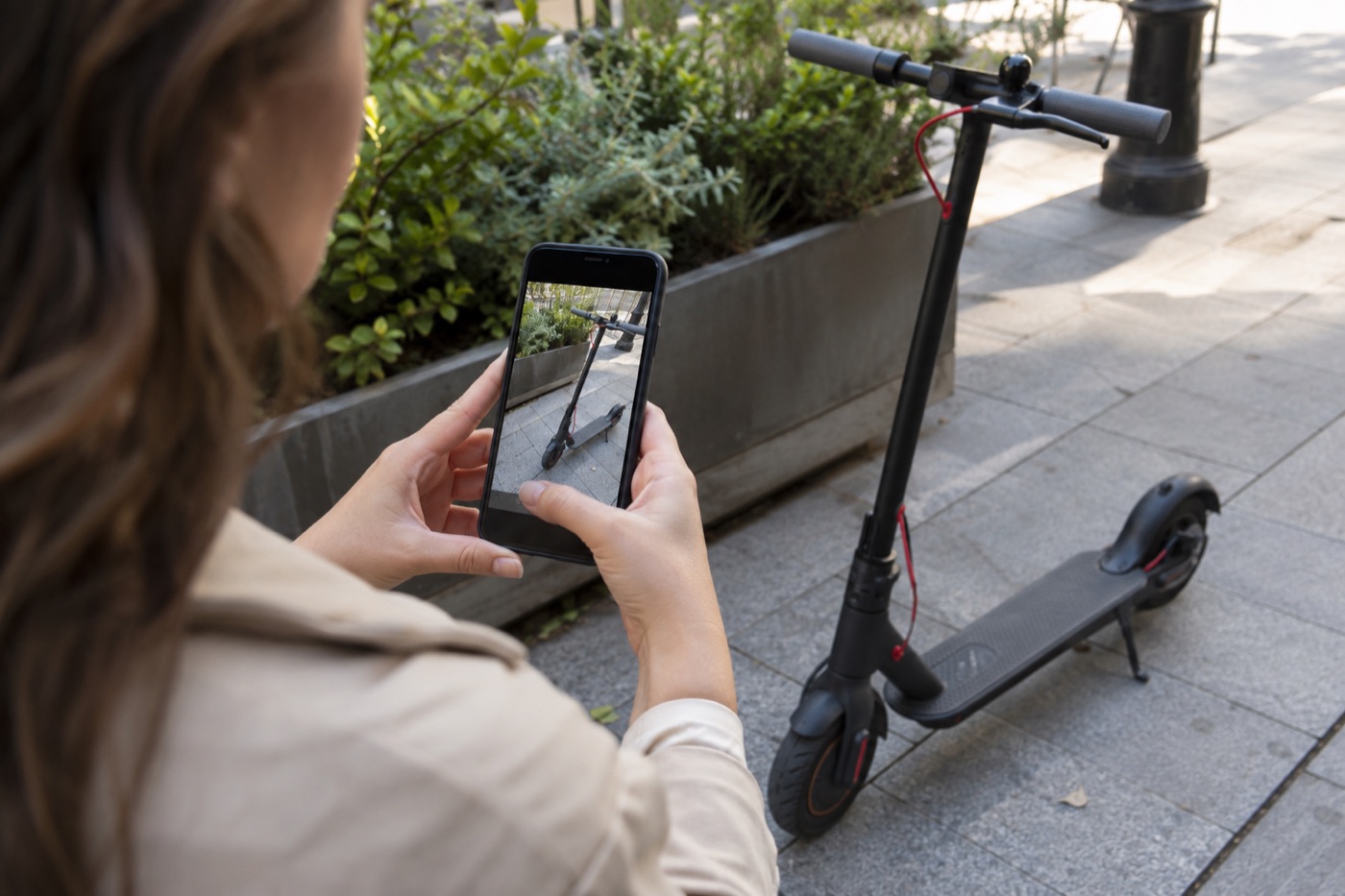
Call 911 if there is an emergency and get medical attention for your injuries. Once it is safe, take pictures.
Get evidence. If a friend or family member accompanies you, they can take pictures for you. You should never linger in active traffic to collect evidence. It is not safe. Do not try to ride a damaged scooter.
You need: pictures; contact information for witnesses or other drivers involved in the accident; the date, time, and location of the accident; and a police report number if there was one. For the picture, don’t just take close-up photos of your scooter. You need context.
That means taking photos of the entire scene, including the intersection, roadway, any cars that were involved, street signs, the curb, or the sidewalk. You also want to capture the conditions of the roadway and where the vehicles came to rest.
You don’t have to determine who was at fault in a crash. Describe what you actually saw or felt, and distinguish those observations from guesses about brake failure or another driver’s speed. You do not need to decide legal fault at the scene.
Preserve all of your evidence. Save your electronic receipt for the ride, take a screenshot of the scooter number, any messages with support from the scooter rental company, your scooter rental history in the scooter app, or any error messages from the app. Record where you left the scooter after the crash. If anyone took your scooter or if you dropped it off for repairs, be sure to tell your attorney. Save all photos, don’t edit them, and preserve the original versions.
What Rental Records Can and Cannot Show
While digital evidence can be helpful (e.g., a map of the scooter route can help your attorney narrow the time period to seek surveillance video footage), app information is often incomplete. App data typically will not identify where the rider was in the travel lane, a pedestrian moving unexpectedly into the scooter’s path or a mechanical problem. Your attorney needs a detailed description of what digital evidence you have, and what it reveals and fails to reveal.
Ask your attorney whether to send a preservation request for the relevant corporate records that include, but are not limited to, any maintenance records, device records and internal communications. In certain cases, such as a scooter with defective brakes, this information may be critical. Be sure to save all app account history, do not edit or modify any of the information in your app, and save any pertinent messages. It is also helpful to determine whether issues were being reported before the crash, or defects discovered afterward.
Preserve the scooter if it is owned, and do not repair, modify, test or dispose of a scooter prior to your attorney’s review and instructions. If you were renting a scooter, let your attorney know who has possession of the scooter (while making sure you are not unlawfully detaining the scooter).
Which Electric Scooter and Local Scooter Laws Apply?
The everyday word “scooter” does not settle a device’s classification. Florida law separately defines motorized scooters, electric bicycles and mopeds. Having a seat or not does not always dictate its definition.
The statutory definition of a motorized scooter in Florida is a motor-driven vehicle that can have no more than three wheels, with or without a seat, and is not capable of traveling faster than 20 mph on level ground; the definition excludes electric bicycles. This is a classification threshold, not blanket permission to ride at that speed. Electric bicycles are separately defined, and their motors are further delineated into classes. Mopeds, likewise, are defined in a different way. If a device is referred to as an e-scooter but does not fit neatly into the legal definition, it will require additional consideration.
A scooter operator riding a device that qualifies as a motorized scooter has the rights and duties of a bicycle rider, except in certain instances. Under section 316.2128, local governments can regulate their use and set a minimum age for their operation. Thus, the local rules cannot always be assumed to apply on another sidewalk or bike lane in a different city. It is not enough to unlock the scooter from its app, and you should know that you can legally operate it on a particular path in a given city.
For these reasons, after a scooter accident, a lawyer will want to know more than just a company logo or decal on the device. The make and model, user’s manual, the rider’s own testimony about the vehicle’s handling and capabilities, and whether there were any aftermarket modifications will all come into play. The legal analysis will also involve the specific location of an accident and the rules applicable at the time of the incident.
What Are the Possible Causes of Electric Scooter Accidents?
Many scooter accidents may be caused by a motorist who turns into a rider, fails to yield, or even opens a door into traffic. Many times, a dispute arises about what happened because witnesses rarely get to see the accident in its entirety. Evidence such as photos and videos is helpful because they can show what occurred and how it happened.
In other cases, no car is involved at all. The claim could arise from a poorly maintained rental scooter or a defective part that was produced by the scooter manufacturer. A third possibility is that the rider may encounter a dangerous road condition like a pothole or debris. These claims raise different issues to consider. Damage discovered on a part after the accident may have resulted from the crash rather than caused it. Likewise, with road conditions we must explore who controlled the property, what legal duties they owed, and whether or not they had actual or constructive notice of the danger.
For example, if a rider stops near a broken curb, uses the brake, and falls, the cause could be the way the brake works, the way the curb is constructed, or even the way in which the rider used the brakes. More than one of these factors could contribute.
Just because there is an injury does not always mean it's the fault of a careless driver or defective scooter part or dangerous property. But by preserving the scooter and the evidence at the scene, the issues can be evaluated for what they are rather than guessing at what may have occurred.
These types of scooter accidents may call for an accident reconstruction or inspection to resolve the dispute and get to the bottom of the question. An experienced injury lawyer will know when this may be necessary to resolve these difficult issues.
Goldman Daszkal & Stallone’s bike, pedestrian and e-scooter accident practice represents people involved in bike, pedestrian, and e-scooter accidents resulting from negligent drivers, defective parts, and dangerous conditions.
How Does Negligence Affect Scooter Accident Claims?
Fault can be assigned to the scooter rider in a scooter accident. This is done even in cases where it appears another driver has caused the collision. Factors involved include the rider’s speed, location on the roadway, attentiveness, and compliance with traffic rules. Other drivers’ conduct is considered as well.
Accusations of fault made by an insurer or other driver are not a final judgment as to the legal responsibility for an accident.
Florida follows a comparative-fault system. Damages to which a claimant would be entitled in a legal claim would be reduced by the percentage of fault assigned to them. In negligence actions subject to the current rule, a claimant found more than 50 percent responsible for their own harm cannot recover damages. A lawyer will review the facts in your case to determine the specific rule that applies.
Disputes regarding fault for a scooter accident could affect whether you can receive compensation as well as how much money you can recover. When you meet with an attorney to discuss a potential legal claim, tell them everything you know about the accident, including things that may cast you in a negative light. For instance, tell a lawyer if you received a traffic ticket, made modifications to your scooter, or do not remember everything that happened. Accurate assessments are only possible with the full facts.
Which Insurance Companies Might Cover Your Injuries?
Establishing who’s at fault is often different from identifying who’s covered and whether policy limits will compensate for all your losses. Policies for scooter companies and other parties must be read on their own terms. Coverage for your particular e-scooter crash depends on the relevant insurance policies. A rental receipt alone does not establish coverage.
A scooter accident attorney may need to look into the terms of insurance policies from the driver, other involved parties, your e-scooter rental, or you. This can be particularly difficult in Florida because the scooter law excuses some scooters from insurance requirements and state registration requirements, but that law doesn’t create coverage under a person’s private policies.
Keep your rental agreement, along with any terms that apply to a particular ride. Shared e-scooter terms vary widely from one company to the next. A lawyer will look at the agreement for terms and conditions, liability waivers, or reporting and dispute resolution requirements. “Agreeing” to the terms and conditions in the app doesn’t always mean you can’t make a claim. And renting the scooter doesn’t always mean the company will be liable.
- Keep any insurance claim numbers, correspondence, and requests for statements or interviews.
- Talk to an attorney about your obligations or deadlines before you give a statement or sign a liability release. And never speculate or guess; stick to the facts as you know them.
What Do Electric Scooter Injuries Mean for Your Everyday Life?
Personal injury claims can compensate a wide variety of losses, including medical expenses, lost wages, pain and suffering, among others, depending on the applicable legal rules and the facts of each specific case. Future financial impacts must be supported by evidence from your situation and can’t just be lifted from the evidence in another rider’s case.
As soon as possible and more as necessary, you should gather documentation to support your injuries and losses. These may include:
- Medical records and bills, plus any communication you receive regarding payments or billing to insurance
- Employer statements, pay stubs and other work documentation of lost time and physical limitations on the job
This information gives your attorney a better picture of your specific injuries than a list of diagnoses alone.
Keeping notes on your personal challenges can also be helpful, including the specific ways your injury affects you day-to-day (needing help with transportation, being unable to do normal household tasks, etc). Such a log is not a substitute for proper medical care and records, but can be a helpful addition.
Serious injuries can take much longer to heal than anticipated, and the initial visit to a medical provider may not account for the amount of time you’ll be off of work. Make sure to keep your attorney updated on the information from your medical providers, follow-up treatments, and anything new to add to the overall picture of your case.

Which Deadlines Apply to a Personal Injury Lawsuit?
The video footage might get overwritten, the scooters can be returned to service and witnesses can be hard to locate later. You should consult an attorney as soon as possible.
A personal injury attorney is in the best position to help you sort out the different types of claims available. It is not uncommon for people to think that making an insurance claim is the same thing as filing a lawsuit in court. It is not. A pending insurance claim does not necessarily satisfy lawsuit filing deadlines or public-entity notice requirements.
Florida section 95.11 generally gives two years to file a negligence lawsuit. However, the limitations period may be different depending on the type of case, when the accident occurred, who the accident was with and exceptions to the rules.
There are specific steps required under Florida’s sovereign-immunity law for filing claims against the government. Just because the city maintains the road does not mean the city is responsible for a pothole. It is not just a matter of making an insurance claim. That will not necessarily meet the requirements of the statute for claiming damages against a public entity.
What a Scooter Accident Lawyer Reviews at a Free Consultation
Bring crash documents, photos, rental agreements, medical records and documents from insurance companies. You do not have to know who is to blame before contacting a lawyer. This preliminary documentation helps the attorney determine what else to request and which issues remain unresolved.
Goldman Daszkal & Stallone is a personal injury law firm that advertises contingency-fee representation. Ask to review the written agreement, including how attorney fees and case expenses are handled and what happens if there is no recovery. During your free initial meeting, ask about the unknowns in the case and who will keep you informed. A promised settlement amount cannot replace an investigation.
To discuss how a scooter accident lawyer can help, call (954) 428-9333 or request a free consultation. Goldman Daszkal & Stallone’s office is at 1630 West Hillsboro Boulevard in Deerfield Beach.
This information is general and does not constitute legal advice or create an attorney-client relationship.