Two cars collide at a South Florida intersection. At first it looks like any other crash on Federal Highway. Then somebody mentions that one of the drivers had the Uber app open, or was on the way to pick up a Lyft passenger, and the whole thing gets more complicated.
Why more complicated? Because now you are dealing with more than two damaged cars and two versions of what happened. You also have a trip that was booked through an app, an insurance policy that changes depending on what the driver was doing at that exact minute, a passenger or a pickup somewhere in the picture, and a pile of digital records that you personally cannot see.
Goldman Daszkal & Stallone P.A. handles rideshare collisions as part of its motor vehicle practice, and a lot of that work is sorting out these extra layers for people who were hurt.
A rideshare accident lawyer has two investigations going at once. One is the crash. The other is the ride, meaning who was logged in to the app and whether a trip had been accepted yet. Where you were, what the driver was doing, which insurance policies are in play and what evidence still exists will all affect how your claim gets evaluated, so here is what to know after a rideshare collision.
Your role in a rideshare accident changes the starting point
Passengers get hurt in rideshare crashes, but so do people in the other car, people on foot, and the rideshare drivers themselves. The insurance available to each of them is not the same, and neither are the claims. So before your rideshare accident attorney assumes anything about your accident case, they need to know where you were when the collision occurred.
If you were the passenger, you probably have the booking in your phone and a receipt in your email. If you were driving the other vehicle, you had no access to the app at all and may not have known it was an Uber until later. A pedestrian might have nothing but a license plate number and a memory of where the driver pulled over.
The first thing that your rideshare accident lawyer must do is determine which parties were involved and what documentation each of them has. Tell your lawyer where you were sitting or standing. Tell them who actually requested the ride, since it is not always the person who got hurt, and whether anyone else was riding with you. People also forget to mention when the car they got into was not the car the app showed them. If the plate or the model did not match, say so. It needs to be looked into, and it does not prove anybody did anything wrong until the facts are in.
Insurance policies follow the rideshare driver’s activity
A rideshare driver is not always working in the way the insurance cares about. At any given moment the driver is offline, or logged on and waiting for a request, or already engaged in a prearranged ride. Which of those it was at the time of the accident decides most of the insurance questions.
Keep in mind that an Uber or Lyft driver is usually driving their own car, and may use it for groceries in the morning and rideshare trips that same afternoon. Under Florida’s transportation network company (TNC) statute, the minimum liability limits depend on whether the driver was logged on without an accepted trip or was on an active trip with a prearranged fare.
An active trip starts when the driver accepts the request, and it does not end until the last passenger is out of the vehicle. That means the drive over to pick you up counts. For that whole stretch, at least $1 million in primary liability coverage is required. If the driver was only logged on, with no prearranged fare yet, the minimums drop to $50,000 per person and $100,000 per incident for bodily injury, plus $25,000 for property damage. Those numbers are coverage limits. They are not a promise about what anyone will be paid.
So with Uber and Lyft accidents, step one is finding the right insurance policies and reading what they cover. The insurance card the driver hands you at the scene is a start and not much more than that.
Your attorney also has to keep two things separate, which are the insurance that covers some other driver’s liability and the coverage you may have under your own policy. People mix these up all the time, and it causes confusion during the case review.
Your own policy matters more than you might expect, because Florida is still a no-fault state. Personal injury protection (PIP) generally pays a share of your first medical bills and lost wages no matter who caused the crash. Whose PIP applies when you were a rideshare passenger, and whether there is any uninsured or underinsured motorist coverage to look at, depends on the policies involved.
When rideshare companies may face an accident claim
It’s natural to think that the company whose app set up the ride answers for the driver. Florida law does not work quite that simply. Under the TNC statute, a driver is an independent contractor as long as certain criteria are satisfied, so a claim against the company cannot just tag along with the claim against the driver. It has to stand on its own facts and its own legal basis.
A personal injury lawyer can look at that relationship and at whether there is some independent basis for holding the company liable for this particular collision. Take a theory that the driver’s background check was negligent. That takes documentation, and it takes proof that the bad check is what led to the crash. Being badly hurt does not, by itself, mean the background check was insufficient.
Suing every business whose name comes up is not a substitute for finding out what each one did. What matters under the law is which acts, or failures to act, by each defendant caused your injuries. A lot of cases come down to the driver’s conduct and nothing else. Some need a wider look.
Pickup and drop-off details can explain the collision
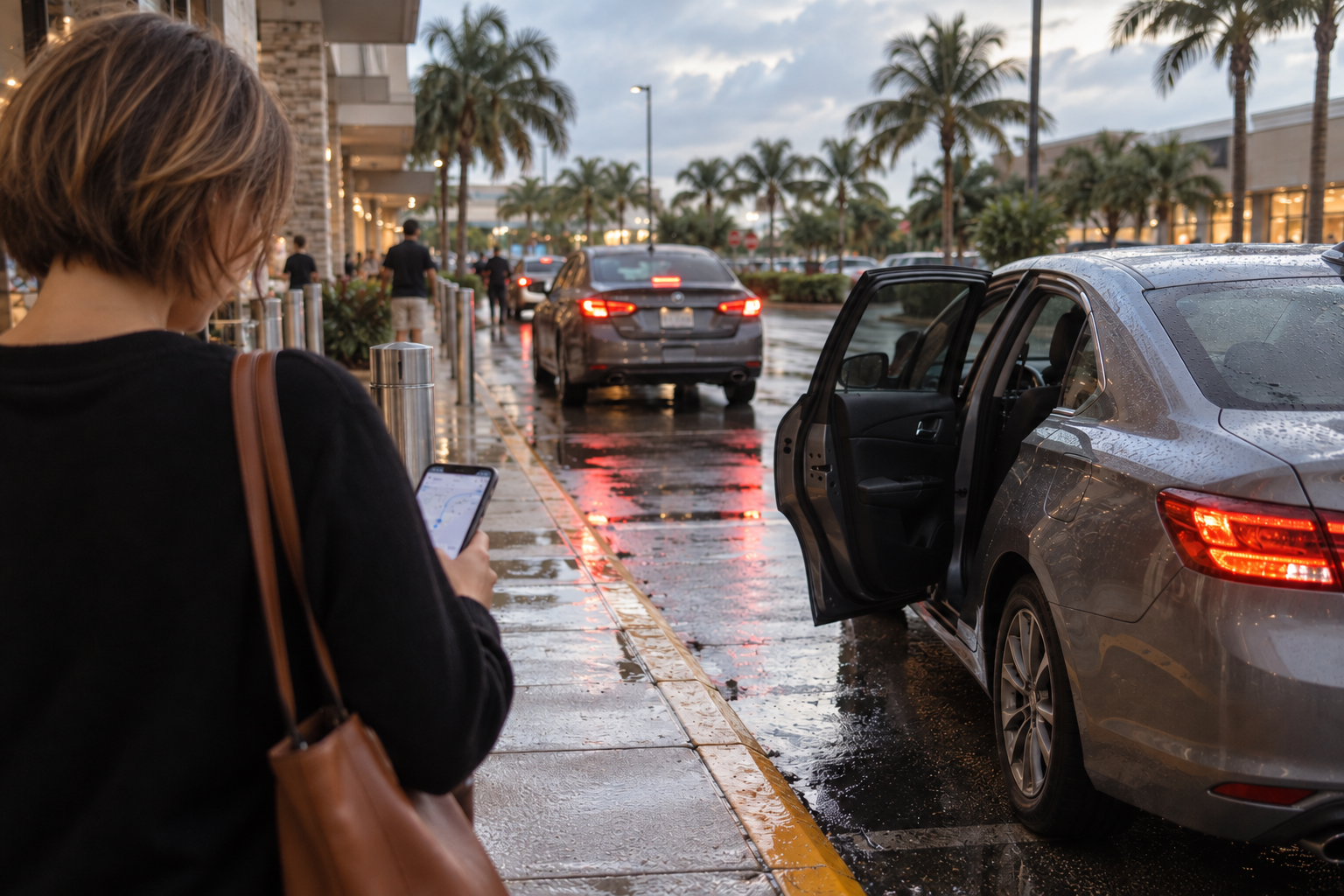
The trip route alone does not explain the collision. You have to look at what the driver was doing at the curb. Maybe the driver slowed down suddenly to pick someone up. Maybe they cut across a lane to reach the passenger pickup, or pulled away while the passenger was still in the vicinity of the vehicle. These things matter.
Say a passenger opens a rear door and a second later another vehicle hits it. Now everybody wants to know where exactly the car had stopped, which door it was, what traffic was coming, and how much each person could see from where they were. The fact that a rideshare booking existed answers none of that.
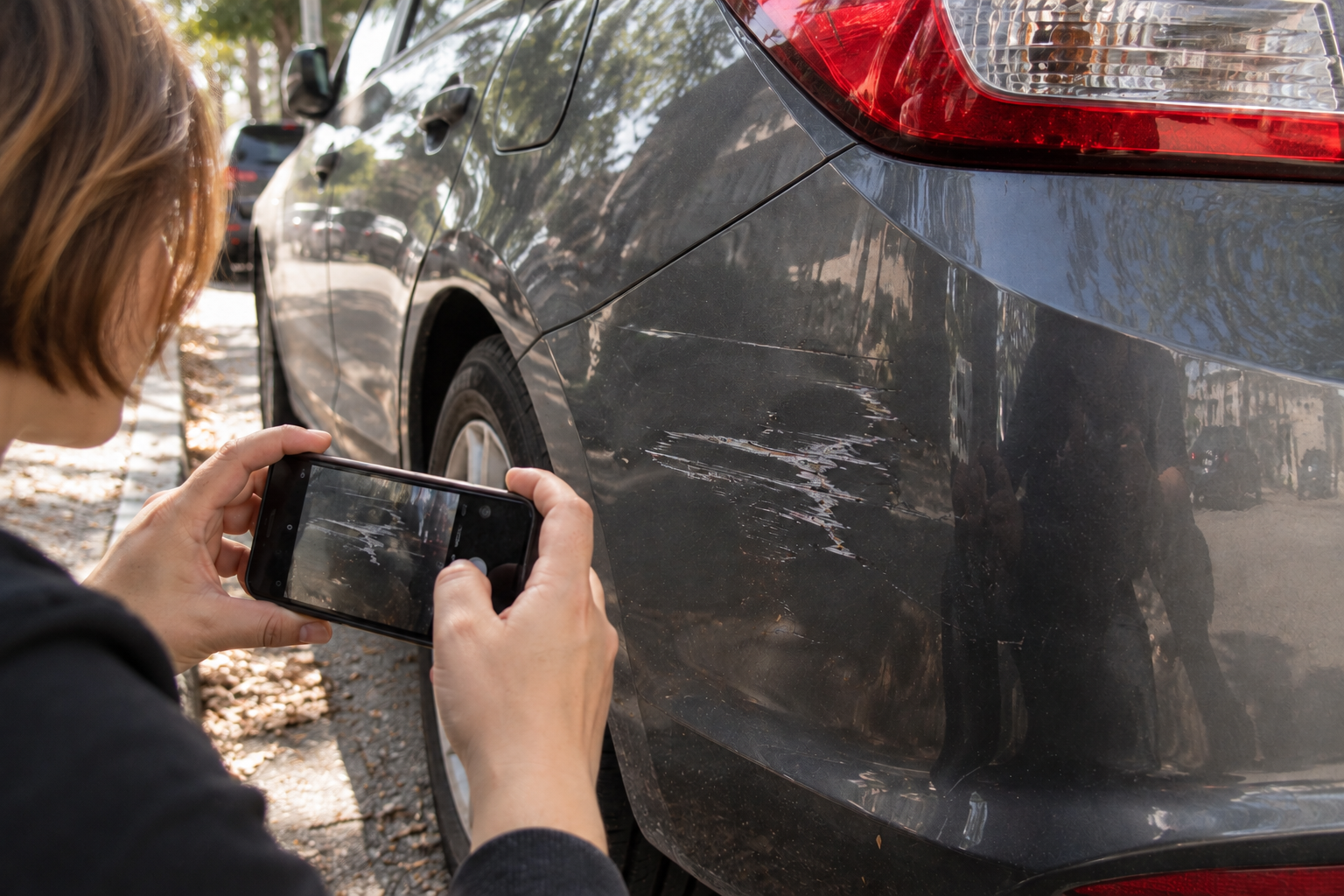
Photos help here. Lane markings, signs, the curb, the lighting, anything blocking the view. A close-up of the damaged door is useful, but it shows something different from a wider shot of where the car sat relative to traffic, so keep both if you were able to take them safely.
Your lawyer might also go looking for witnesses. Somebody standing outside a storefront may have seen the car pull over, may know roughly how long it sat there, and may have an opinion on whether traffic could get around it safely. That kind of information can back up one version of events or contradict it.
Digital evidence complements physical evidence
Rideshare accident investigations use app information on top of the usual vehicle damage, witness statements and videos. And most of that material can come from more than one place.
You may already have the receipts. The driver could have had a dash cam. A nearby store could have had surveillance cameras. Some records have to be requested from the rideshare company, and some will only come with a subpoena. Tell your attorney about all of these as early as you can, while you still remember them. Provide the name and address of the nearby business even if you are not sure whether the business has a camera. Plenty of cameras record over themselves, and some were never recording in the first place. Don’t assume that your attorney will be able to recover missing footage once time has passed.
Don’t edit your photos, texts and videos. Do not delete a chat thread even if one of its messages seems useless. The messages around it may pin down a time, or mention a person you forgot was there, or show that you wrote something down before anybody was arguing about it.
Be a little skeptical of all of it, including the evidence that helps you. Do the receipts actually put the car where everyone says it was? Does the damage fit the angle of collision that is being claimed? Did the witness see it happen, or only hear it and turn around? You ask these things to get to the truth, and sometimes the truth is not what you first assumed.
Report the accident without guessing about fault
After a Lyft or Uber crash, the first thing is to make sure you are safe and healthy, and to get checked out if you are not sure. Then report the accident to the necessary authorities and hang on to the report number.
Reporting the incident in the rideshare app is fine, but understand that it is not a police report and it is not an insurance claim. You could easily end up with all three. Keep track of each and save every confirmation you are sent. Whatever you report, whether you were riding in a Lyft or an Uber, describe the area, the approximate time and what you observed, the same way you would in any accident report, and leave out your guesses. Knowing which rideshare company was involved tells you nothing about which driver was at fault. And if you later spot a mistake in something you reported early on, hand the document to your accident lawyer and show them the error.
Plenty of people hurt in these crashes were never in the rideshare vehicle. They were in another car, or walking, and have no booking history at all. If that is you, write down the license plate and the driver’s information and gather whatever evidence you can from the accident scene. Also tell your lawyer how you found out that a rideshare company was involved in the accident.
Injury evidence still has to connect the harm to the crash
None of the rideshare insurance complexity replaces the injury documentation you would need after any auto accident. Your lawyer still has to understand your diagnosis, your treatment, any work restrictions and how long recovery is expected to take.
Give your treating provider a clear and accurate history of your symptoms. If you had an old injury or pain in the same place before the crash, say so. This is not information to hide. What has to be sorted out is whether the accident caused a new injury or made an existing one worse, and the records from before and after are how you show the difference.
It also helps to keep notes on how the accident has changed your days, in practical terms. Maybe you missed a shift. Maybe you could not lift your child for two weeks, or you now need help with a task you used to do alone. Write these down plainly, as they happened, and resist turning them into an argument for what the case is worth. A handful of specific details is far easier to evaluate than being told that everything is “worse.”
If your treatment plan changes, let your lawyer know. A recommendation for more testing or another evaluation can change which medical records your lawyer wants in hand before settlement discussions begin. That said, nobody should undergo medical testing they would not otherwise need just because there is a claim.

Who is liable in a rideshare accident with shared fault?
In a rideshare accident there are usually several people with a version of what happened, and the versions do not always line up. Your attorney has to dig into the evidence that hurts you just as hard as the evidence that helps. No one likes to admit a weakness, but the problems you ignore tend to come back in settlement talks.
Florida’s comparative fault statute typically reduces the award by the percentage of fault assigned to the claimant. It also bars any recovery on covered negligence claims if the claimant is found more than 50% responsible. How those rules land in your case depends on your facts.
A passenger is rarely at fault for how the driver drove. Still, a passenger’s own actions can be considered, and opening a door into traffic is the classic example. Drivers are in a similar spot, because someone else’s error does not excuse them from looking hard at what they did. Sorting out who did what is a big part of building a claim that holds up.
What to bring to a rideshare accident lawyer
If you were injured in an accident involving a rideshare vehicle, you do not need a perfect case file before a law firm will talk to you. Bring what you have. Tell your attorney what you are missing.
A good starting pile would be the date and place of the accident, your pictures, the report number, the ride information, any insurance correspondence and whatever medical records you have so far.
Come with questions too. Which entities should we look into? What evidence are we likely to lose if we wait? Which policies are we looking for? What are the deadlines? Who is going to keep me informed?
On deadlines, do not wait long to ask. Florida now generally gives you two years from the date of the crash to file a negligence lawsuit, and some of the evidence will be gone long before that.
Goldman Daszkal & Stallone P.A., which has an office in Deerfield Beach, includes rideshare collisions within its motor vehicle practice.
If you have been hurt in a rideshare crash, an attorney can help you take the scattered app data, the photos from the scene and the letters from insurance companies and turn them into an investigation with clear next steps. The goal is a claim built on what actually happened, which is not always what the app shows. To talk it through, call (954) 428-9333 or request a free consultation with a rideshare accident attorney.