
Most workers who get hurt on the job assume their only option is to file a workers’ comp claim and move on. That’s understandable. Workers’ compensation is the most visible system, the one employers talk about during onboarding and post on breakroom bulletin boards. But it isn’t always the whole story, and for many injured workers, it isn’t even close to the full picture of what they’re owed.
Here’s something worth understanding right out of the gate: workers’ comp only covers your employer. If someone else’s negligence caused or contributed to your injury, that person or company may owe you damages that no workers’ comp claim can touch. Lost wages. Pain and suffering. Full compensation for medical bills that workers’ comp would only partially cover. These are things that only a personal injury lawsuit can deliver, and they come through a legal pathway most injured workers never even hear about.
Goldman Daszkal & Stallone, based in Deerfield Beach and serving clients throughout Florida, has spent more than 34 years helping people understand what their injuries are actually worth.
This article explains how those cases work, who might be legally responsible for your workplace accident, and why speaking to a qualified work injury attorney as early as possible can make an enormous difference in your outcome.
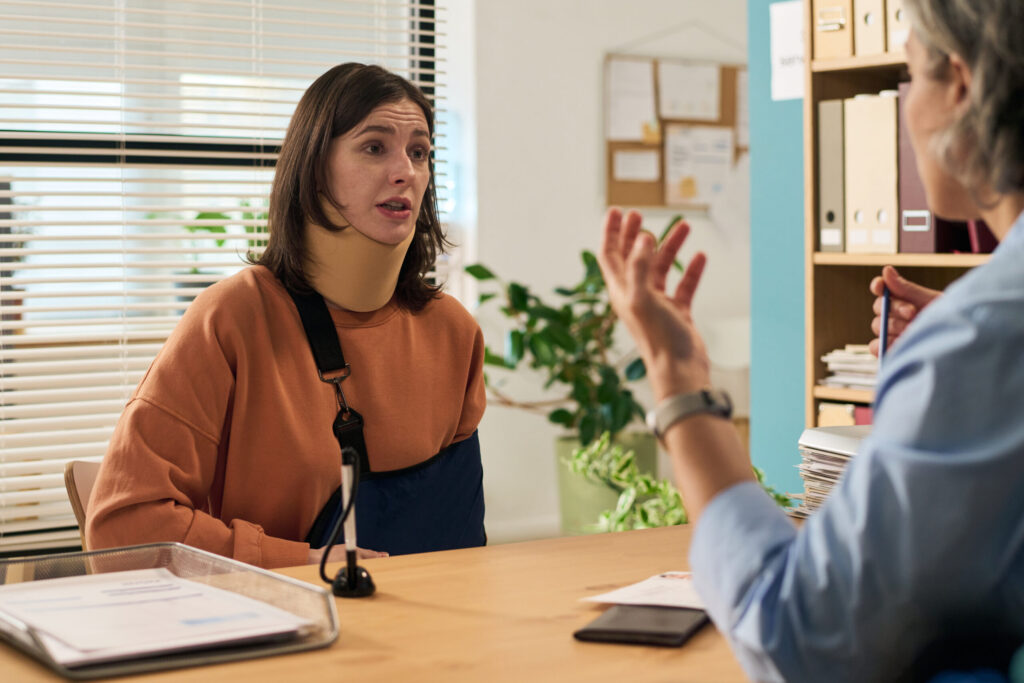
Why Workers’ Compensation Isn’t Always Enough for Workers Injured on the Job
Most injured workers find out too late that the primary function of workers’ compensation is not to fully compensate you for your losses, but rather providing you with fast benefits without going through court proceedings.
The no-fault principle initially looks good. Since there is no need to prove the liability of your employer, all you have to do is apply for your benefits, which will be provided without delay. However, the hidden drawback of this process is that after getting the benefits, your right to sue your employer is forfeited. This means that even clear cases of employer negligence don’t guarantee additional compensation.
Another limitation of workers’ compensation is the narrow range of benefits it provides.
Although it includes partial replacement of your income as well as medical services considered necessary by the law, the emotional and financial toll of being unable to work or support your family is not covered. And when it comes to permanent or chronic injury, the difference can be even more noticeable.
The reality is that workplace accidents sometimes involve parties other than your employer. In such situations, you can claim workers’ compensation as well as apply for a civil lawsuit against other third parties. These procedures do not compete, as we will discuss later on, but rather complement each other with respect to subrogation.
What Qualifies as a “Third Party” in a Work-Related Injury Claim?
A third party is anyone outside your employer who also bears some liability for your workplace injuries. This may come as a surprise.
Contractors and subcontractors. On many work sites, multiple contractors and subcontractors may be operating on the same property at the same time. If the negligent actions of a subcontractor injured you, that subcontractor could bear responsibility even though it didn’t directly hire you.
Property owners. In many cases, the property owner—not your employer—owns the premises where you were working. The property owner has a duty to provide a safe environment for everyone, including your employer’s workers. The owner may be liable for failing to do so under a premises liability claim. You aren’t barred from bringing a claim against the landlord for negligence even if your employer can’t be held liable under workers’ comp.
Equipment and product manufacturers. Regardless of who your employer is, a substandard tool can cause the same harm to anyone. If a defective product or piece of safety gear caused harm due to a manufacturing or design defect, the manufacturer or supplier can be liable for your damages under a product liability claim. In some cases, you don’t even have to prove negligence — only that the product was defective and that the defect caused injury to the employee.
Negligent Drivers. Deliveries, route drivers, field reps; there’s no shortage of jobs that keep employees on the road, and negligent drivers are just as dangerous on a Tuesday afternoon as they are on a Saturday night. Someone who hits you while you’re working can be sued just like they would in any other accident case.
Staffing agencies. If you were sent to a worksite through a staffing agency, that agency may have its own obligations to keep you safe (which are separate from whatever your host employer may have done, or not done).
The main question in any of these scenarios is whether anyone other than your employer owed you a duty, and whether they failed in that duty. That’s a negligence analysis, which is precisely the type of analysis the lawyers at Goldman Daszkal & Stallone work through before recommending a course of action.
Work Injury Statistics: Understanding the Numbers for Workers Injured at Work
It’s worth understanding what’s going on out there. OSHA’s “Fatal Four”—falls, struck-by incidents, electrocutions, and caught-in/between accidents—cause over 60% of construction fatalities, often involving third-party negligence like faulty subcontractor equipment or site conditions controlled by non-employers. For instance, falls alone accounted for 39.2% of the 1,075 construction deaths in 2023, highlighting why personal injury lawsuits can pursue parties beyond workers’ comp limits, such as property owners or equipment makers.
How Does a Third-Party Personal Injury Lawsuit Work?
Third-party liability cases follow the general arc of any personal injury case. Here’s how it typically goes at Goldman Daszkal & Stallone:
Investigation first. You don’t file a claim until you have facts to support it. That means incident reports, witness interviews, photographs, video footage, contracts, and so on. Depending on the complexity of the accident, it may mean hiring experts in safety engineering or accident reconstruction.
Identify the parties to sue. Sometimes this is easy. Often, it’s not. Who owns the equipment? Who controls that section of the site? What was the specific provision in the general contractor/subcontractor agreement? Making sure the defendant list is correctly identified up front is essential to preserve both time and case value.
Filing the action. The Complaint will set forth the cause of action — who is at fault and the legal theory of liability, e.g., negligence, product liability, premises liability, or a combination. In Florida, there is generally a two-year statute of limitations for any personal injury case, which begins to run from the date of injury, with specific exceptions that can change that time frame. If this period is missed, the right to pursue the claim is extinguished.
Discovery and negotiation. Settlements happen before trial in most cases. It’s the discovery process — which includes gathering safety records, maintenance logs, internal communications, and taking depositions — that lets you negotiate from a position of strength and increase the value of a settlement. A defendant is more likely to move a settlement value upward when the facts and circumstances of the conduct become clear.
Trial. There are cases where the defendant won’t settle for the value of the claim unless and until there is a jury trial. That’s where Joseph Stallone and the attorneys at Goldman Daszkal & Stallone aren’t afraid to go. This readiness to go to trial is one reason settlements are often higher before trial.
How Much Does It Cost? Damages Recoverable in a Personal Injury Lawsuit
This is where the major difference shows up.
Workers’ compensation is structured as a benefit that pays for a limited set of items. By contrast, a third-party personal injury lawsuit can go after all the damages that result:
- Medical bills: past and future. Not just those the system deems “necessary and related,” but those you actually require.
- Lost wages and loss of earning capacity: lost past earnings and projected future earnings if you can’t go back to the same type of work.
- Pain and suffering: physical and mental, both short-term and long-term.
- Loss of enjoyment of life.
- Permanent impairment and/or disfigurement.
In some instances, there is a possibility of punitive damages, though this typically only occurs when the responsible party was particularly reckless.
What you should know is that where there is a workers’ compensation case alongside a third-party lawsuit, the workers’ comp carrier will be entitled to a certain amount of reimbursement from any civil recovery you obtain. An experienced work injury attorney will be able to put these elements together and negotiate the best possible resolution so that you receive the maximum possible recovery.
On-the-Job Car Accidents and Your Rights as an Injured Worker
A car accident on the road is one of the more common scenarios for a third-party claim worth considering.
If you are on the job while driving your vehicle to make a delivery, move from one job to another, or perform some task for a business, and another motorist is at fault for your accident, it’s important to remember that the other person’s failure doesn’t disappear because you were on the clock for another employer. Some of the costs will be covered by workers’ comp. But a third-party auto negligence lawsuit can recover full compensation for pain and suffering as well as any economic losses workers’ comp didn’t pay for.
If the at-fault driver was also working at the time, you may have a claim against them, or against their employer, depending on the circumstances.
Goldman Daszkal & Stallone investigates these cases to the same extent as any other serious injury case. The interaction between on-the-job status and civil auto liability is well-trodden ground in Florida law, and the law firm has handled these cases for decades.
Injury Claims for Defective Equipment: What a Work Injury Lawyer Can Do
This sometimes comes as a surprise.
The company that manufactured the equipment you were using when it failed has no employment relationship with you; their duty to you runs through product liability law, and in some states, product liability is a form of strict liability. That means you don’t even need to prove the manufacturer was negligent — you only have to show that the product was defective and that the defect caused your injury.
Design defects, manufacturing defects, and missing or insufficient warning labels can all form the basis for a claim against a manufacturer and often a distributor as well.
These kinds of cases can be extremely high in value, and because the defendants have their own legal teams and resources, you don’t want to give a company or manufacturer any reason to think you don’t have the resources to take them to court when their equipment is found to be dangerous. Goldman Daszkal & Stallone has the expertise to handle defendants like these, and they have recovered over half a billion dollars and successfully handled over 5,000 cases.
Injury Cases Against Multiple Defendants After a Workplace Accident
Construction sites are different because they are layered projects that are often complex.
A general contractor uses subs. A developer hires a general contractor. A developer will also use architects and engineers. Construction equipment rental companies are used as well, and on any given day, there are multiple companies on the same site sending their respective workers in. Anyone hurt on a project like this needs these complex matters investigated and analyzed to determine who was at fault.
Often a general contractor owes a duty of care to all workers on site. A property owner could be responsible because, even though they may have hired someone who was supposed to take responsibility on their behalf, there might be certain responsibilities the owner retains. A rental company can be responsible for the equipment they rented out.
Often, injured construction workers have claims against multiple defendants in one case, and all those defendants have a responsibility to contribute to the total amount of the recovery. The skilled legal team at Goldman Daszkal & Stallone will identify every responsible defendant before the statute of limitations expires on any of them, because once it expires, that’s it!

How a Free Case Evaluation Works With Our Work Injury Law Firm
If you’ve been injured on the job and want to find out whether you can pursue something besides workers’ comp, a free case evaluation is a good place to begin. It’s free, it’s non-binding, and there’s no pressure at all.
They’ll talk with you about the basics: what happened, where it happened, who was there, the cause of the accident, and the nature of your injuries. They’ll ask whether you already have a workers’ comp case and how it’s moving. Why? Because workers’ comp matters for any potential third-party claim you may be able to pursue, both in terms of timing and the way the third-party case will look.
They’re on the lookout for any indication that someone other than your employer or the insurance company may be liable. Were you hit by someone not at work? Did another company cause the situation? Is your employer’s workplace owned by another party? Was another driver negligent? You might not know that these facts matter, but the team might recognize that they could be the difference between opening or closing the door to additional claims.
Goldman Daszkal & Stallone works on a contingency basis; you don’t pay unless there is a recovery on your behalf. With medical bills, lost wages, and the emotional burden of an injury weighing on you, a no-fee-unless-we-win structure means less financial risk in exploring options that might actually have an impact.
Workers’ Compensation Doesn’t Cap What a Work Injury Attorney Can Recover for You
Workers’ comp does a great job delivering an immediate level of protection to injured workers; after a work injury, it moves quickly and doesn’t require you to argue over fault. It doesn’t, however, measure the full cost of that injury. It also says nothing of other parties who may be liable.
If a contractor cuts corners at a work site. If a manufacturer made and shipped a product it knew was defective. If a driver ran a red light while you were working. Those parties owe you something workers’ comp will never cover, and they are liable under a different legal theory.
For 34 years, Goldman Daszkal & Stallone has sought out these claims, built them, and pursued these cases to a resolution that truly reflects the costs of the injury, rather than just the workers’ comp benefits that might be payable. The case evaluation is free, and Goldman Daszkal & Stallone charges nothing unless they recover money for you.
If you were hurt on the job and want a clearer picture of what your full case might entail, you have a lot to gain by having that conversation.
Use up and down arrow keys to resize the meta box pane.