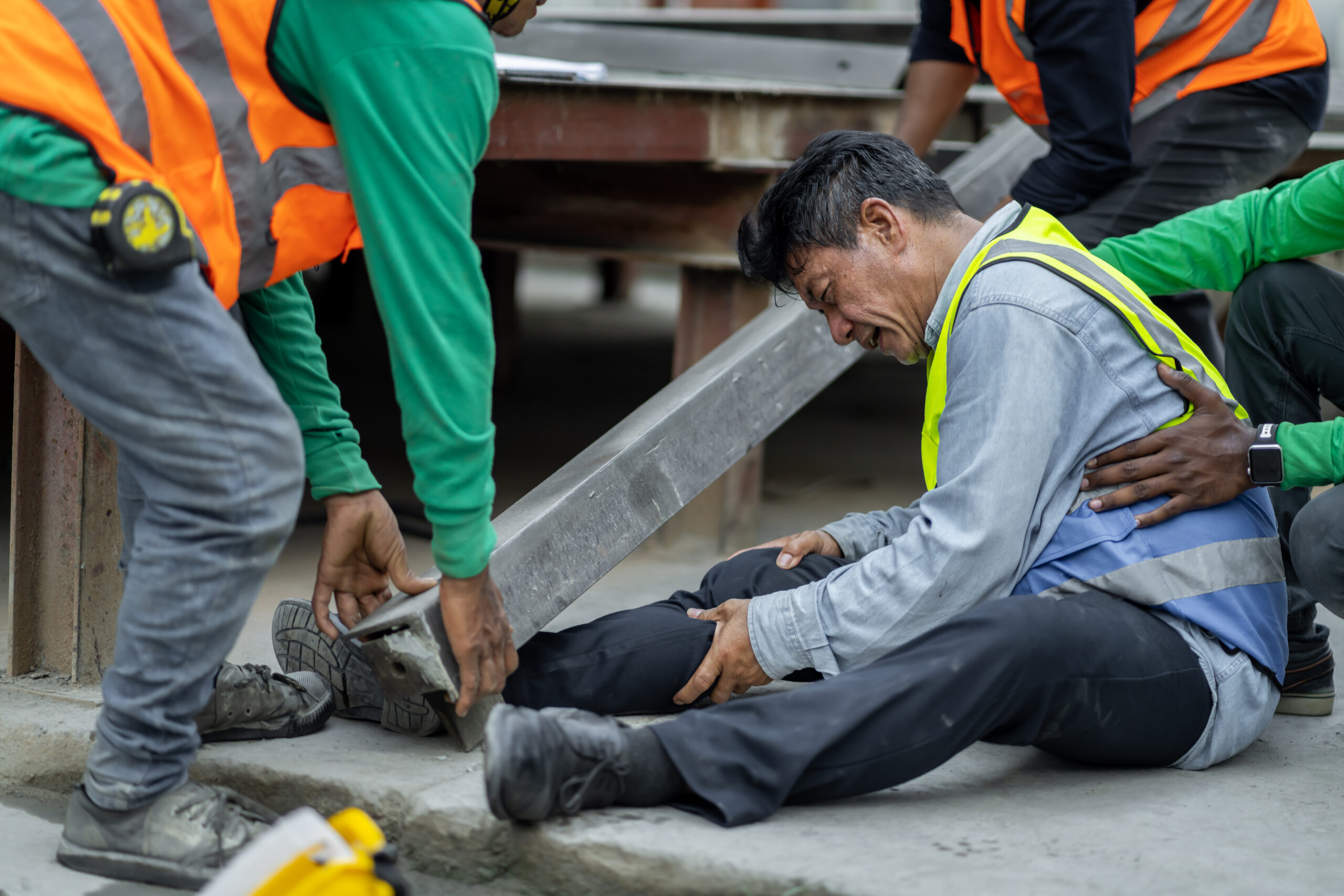
You got injured on a construction site. Maybe it was a fall from scaffolding, a piece of equipment that malfunctioned, or materials stacked by someone who wasn’t paying attention. Whatever happens, something often changes the moment it’s reported. Suddenly, your supervisor seemed more interested in paperwork than your well-being. And the story of what happened started looking a little different in the incident report than what you remember.
This isn’t paranoia. It’s a pattern. Construction companies, general contractors, and property owners often have lawyers ready for exactly this situation, and those lawyers are already working. The question is whether you have someone working for you.
Goldman Daszkal & Stallone is a personal injury law firm based in Deerfield Beach that has been fighting for injured people across Florida for more than 34 years, with over 5,000 successful cases and more than half a billion dollars in total settlements. Joseph Stallone and the team handle construction accident cases alongside the full range of serious personal injury claims, and they offer free initial consultations to workers who’ve been hurt and don’t know where to start.

Why Construction Accident Cases Are Different From Standard Injuries
The typical path for almost any workplace injury is pretty straightforward. You file a claim, you collect your benefits, and you move along. But if your injury occurred on a construction job site, that standard route could have left a large sum of money on the table. That’s because construction injuries rarely involve just one employer, contractor, or potentially liable party.
Consider the complexity of most construction site operations: you have a general contractor, multiple subcontractors, the property owner (who may or may not be present), a rental company supplying machinery, and an outside party supplying materials who will likely never set foot on the site. Once an injury occurs, figuring out who is at fault can get confusing fast.
One major distinction between workers’ compensation and a personal injury claim is that workers’ compensation generally applies only to your direct employer. If an employee of a subcontractor is injured due to poor working conditions left behind by a general contractor, for instance, there could very well be grounds for a personal injury suit against entities that never even cut that employee a paycheck. That’s a very different type of case, one that most employers and insurance companies will work to keep their employees away from. A construction accident attorney doesn’t simply look at the employment relationship. They investigate the entire site.
What Causes Construction Accidents That Paperwork Won’t Show
OSHA and the Bureau of Labor Statistics have spent years documenting construction-related fatalities. From falls to being struck-by, struck-in, and caught-in accidents, the “fatal four” cover a vast majority of construction deaths. There is nothing surprising about these findings. We know how these accidents come about because they are completely preventable.
However, you might not always find the following items in official documents:
- The guardrail that was reported to be loose just three weeks before it gave way
- The site foreman ordering a crew to forgo the use of their fall protection harnesses because they were falling behind on the schedule
- The subcontractor that failed to provide required safety training
- The machine that was overdue for its maintenance and had not yet been inspected
The paperwork is generally filled out by the employer or someone overseeing the site. It’s in their best interest to paint it as an unexpected, unforeseeable event rather than the result of months and months of corner-cutting. An experienced construction accident attorney will look into the relevant pieces of documentation: OSHA site inspection logs, equipment maintenance records, safety training records, prior complaints against the company, and even interviews with your fellow workers (some of whom may know more about what actually happened and may need some encouragement to come forward).
Who Can Be Held Liable for Construction Accidents
In construction cases, things get especially complicated. The scope of liability can extend to the owner of the property, the general contractor, multiple subcontractors and their employees, the manufacturing or rental company for the equipment involved, and a materials supplier.
Each entity’s liability depends on factors such as the degree of control it exercised and whether it knew or should have known about the hazardous condition. For example, it doesn’t matter if the owner of a property never had any type of contractual or employee relationship with the injured person if they had actual control over the site and failed to correct known dangerous conditions. If a defect contributed in any way to your injury, you may be able to file a claim against the manufacturer of the equipment, with the help of a personal injury lawyer.
Damages You Can Recover in a Construction Accident Claim
Workers’ comp doesn’t cover these additional parties at all. If you only pursued workers’ compensation benefits, you could leave significant compensation on the table that could have been yours if you filed a third-party lawsuit with Goldman Daszkal & Stallone. Our firm tries to include everyone at fault, not just the most convenient target. The biggest difference between workers’ compensation and a personal injury claim is the range of damages available. Comp is supposed to pay medical expenses, but it’s limited to approved providers and pays only a fraction of medical bills. A personal injury claim allows you to ask for: the full value of your medical expenses, including surgery, rehabilitation, and future medical costs; your lost wages, both past and future; pain and suffering; permanent disability and disfigurement; and loss of life’s enjoyment. Future medical expenses alone can be substantial in serious injury cases. A construction site injury doesn’t just heal up. A traumatic brain injury often results in long-term or permanent effects. A serious injury, such as a crushed limb, severe burns, and the like, will last a lifetime. To determine what your future medical expenses might be, you need the testimony of medical experts, something the average injured worker doesn’t have at their disposal. Goldman Daszkal & Stallone, which is experienced in personal injury claims, can find the right experts to testify in the case.
Proving Liability in a Construction Accident Case
It’s one thing to be able to demonstrate how things should have been done. It’s another to prove that a particular contractor or employer was negligent in failing to do them. There are four elements to negligence in a personal injury case: duty, breach, causation, and damages. That is to say, it involves proving that an unsafe situation should have been known about and wasn’t being corrected. In a construction case, the general contractor has a certain degree of responsibility for keeping the worksite safe, and that responsibility includes putting appropriate safeguards in place as well as monitoring the site to ensure the safeguards are being used. It’s not enough to have safeguards in place for some kinds of work when another is being performed; the safeguards must match the type of work being performed. And you have to tie the lack of appropriate safeguards or the failure to monitor to the cause of your injury. The nature and severity of the injuries are also important factors. OSHA standards and the Occupational Safety and Health Act are relevant as well. The standards are specific and cover areas such as fall protection, scaffolding, electrical safety, and trench safety. A violation of these regulations is evidence of negligence — not determinative by any means, but evidence of negligence that is very difficult to dispute. It is important to identify and preserve evidence of negligence before that evidence disappears.
Why Time Matters After a Construction Site Accident
Time works against you in two ways. The statute of limitations in a Florida personal injury suit has been reduced in recent years, which is unfortunate but also significant. If you wait too long, you lose your opportunity to sue; no matter how strong your case, it’s gone. Time matters for another reason as well. If the accident site has already been cleaned up, you won’t find much evidence. If it’s still there, it might be removed before you get to it. Witnesses will forget what they actually saw. Logs and safety records can be tampered with after the fact. In short, it helps to get your own lawyers involved as quickly as possible, in order to preserve evidence of what the site actually looked like when the injury occurred.
How OSHA Investigations Affect Your Case
OSHA investigations add another layer to the process. In the event of a serious injury or fatality at a construction site, OSHA may launch its own investigation, and the results of that inquiry will often be extremely beneficial to an injury claim. But remember: OSHA’s role is to enforce workplace safety regulations, not to build a personal injury case on your behalf. An experienced personal injury attorney will be familiar with how the OSHA investigation process works and how best to coordinate with that investigation while simultaneously gathering and preserving evidence to support the civil case.
Do not wait until you’ve recovered before deciding whether you have a valid claim. By the time you’re healed enough to think clearly, the construction site will probably be gone.
Types of Construction Accident Injuries That Support a Lawsuit
Not every on-the-job injury warrants filing a lawsuit. An attorney who is honest and upfront about this will tell you right away. That said, some of the injuries that most commonly lead to successful construction accident claims include the following:
- Falls from elevations. Scaffold or ladder collapses and falls through unprotected floor openings cause some of the most severe — and sometimes fatal — construction accidents, including spinal cord injuries, traumatic brain injuries, and deaths.
- Struck-by accidents. Falling tools, objects swung or dropped by cranes, vehicles moving through the construction site — when a worker is struck by an object or vehicle, it often indicates that a safety protocol failed or was not followed.
- Electrocutions. Failure to de-energize equipment before work; unmarked, uncovered, or exposed electrical connections; ungrounded tools. Electrocution injuries are typically serious, and in cases involving improper grounding or other electricity-related issues, liability can often be shared between an employer and the electrical utility company.
- Trench and excavation cave-ins. Workers have the right to be protected from the hazard of falling into a trench more than five feet deep. When cave-ins occur and workers are not adequately protected, the employer is often directly liable.
- Machine, equipment, or vehicle accidents. Construction companies are responsible for the condition of their equipment and for training their workers to use it properly. Injuries from equipment and machinery that isn’t properly repaired, maintained, or used can be the responsibility of the employer, the equipment manufacturer, or both.
Repetitive stress injuries and overexertion-related injuries are real and legitimate. However, those types of construction injuries are typically not as well-suited for a significant personal injury lawsuit as injuries resulting from sudden, traumatic events where it’s fairly clear that the worker didn’t cause the injury.
How Injured Construction Workers Can File a Lawsuit in Florida
Florida gives construction injury victims real options. While workers’ compensation covers a lot of the basics, it does limit what you can recover and disallows several types of damages. A personal injury lawsuit opens up the entire range of damages under the law, so long as the claim meets certain criteria and there is a valid personal injury cause of action.
Once you’ve established a personal injury claim, the process is straightforward. This involves identifying potentially liable entities and determining who may be responsible for compensation. Determining what evidence might be available, and deciding if your injuries are significant enough to pursue a lawsuit. Goldman Daszkal & Stallone offers free consultations and has handled injury lawsuits in Florida since its founding. Attorney Joseph Stallone will work with you to look at what happened, who is responsible, and what kind of compensation you might be owed if a suit were filed.
If you’ve been injured in a construction accident, and a workers’ compensation insurance company is already trying to control the information that is available about your injury, it can be invaluable to have a lawyer whose sole responsibility is protecting your interests. Contact us about what happened and find out whether you have a claim. The consultation is free. Our experience in construction accident claims and our success in obtaining verdicts and settlements for injured workers speak for themselves as to what it’s like to have experienced representation in court.