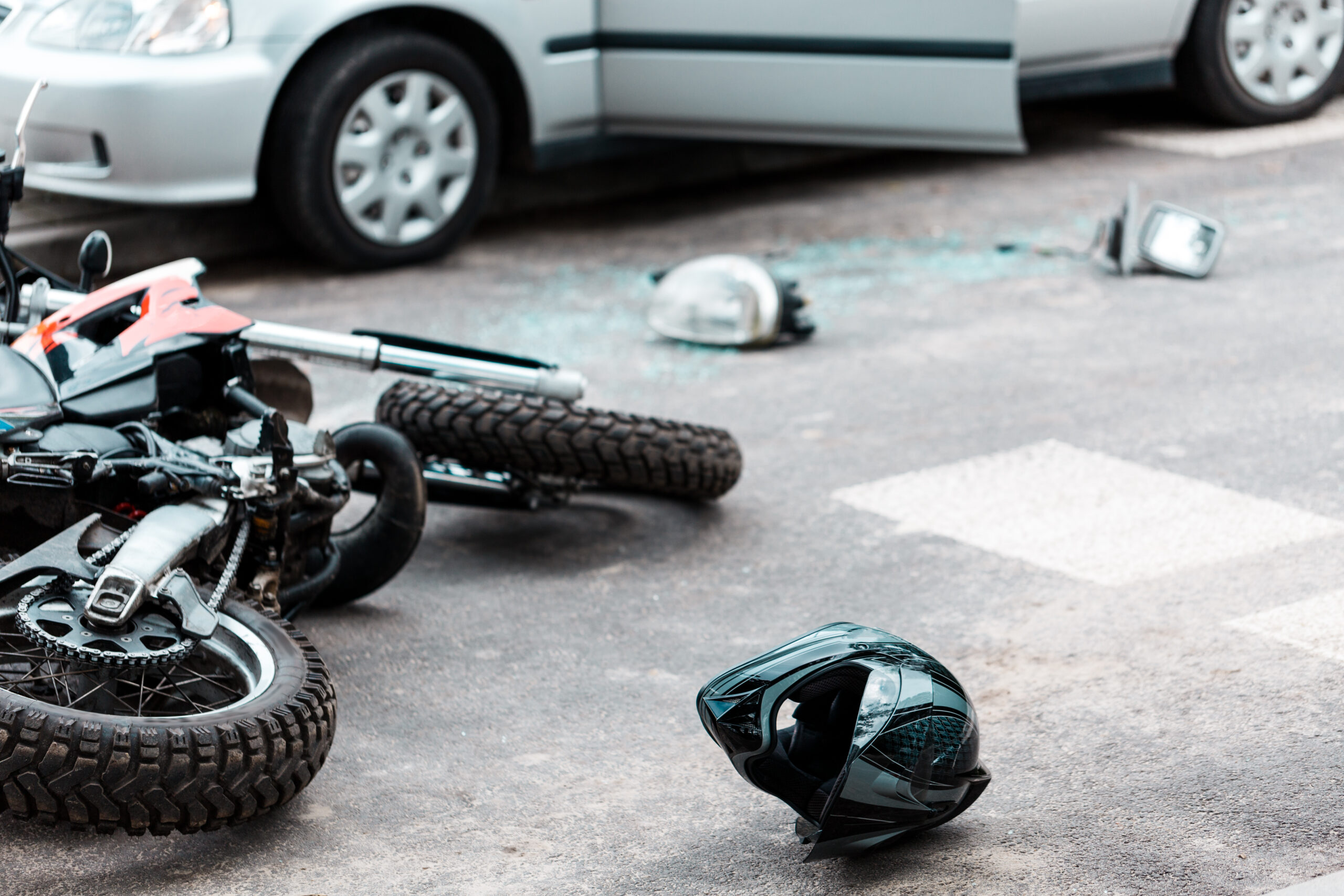
You’re riding home on a clear evening when a driver cuts across your lane without signaling. The next few seconds change everything. Pavement. Impact. Then the slow, disorienting process of figuring out what comes next while your body is still catching up to what just happened.
Motorcycle crashes leave riders in a uniquely exposed position, both physically and legally. Unlike car drivers, you had almost nothing between you and the road. Unlike most injury victims, you’re often dealing with insurance adjusters who’ve already started building a file aimed at reducing what they owe you before you’ve even left the hospital.
Getting the compensation you actually deserve after a serious motorcycle accident isn’t automatic. It depends almost entirely on who is in your corner.
Goldman Daszkal & Stallone, a personal injury law firm based in Deerfield Beach with more than 34 years serving Florida riders, has handled these cases long enough to understand exactly where most claims fall apart and what it takes to prevent that from happening.

Why Motorcycle Accident Cases Are Different From Other Personal Injury Claims
Most people assume a motorcycle accident claim works pretty much like any car accident claim. It doesn’t—not even close. And believing it can end up costing an injured rider a lot of money.
Some of it comes down to bias. An insurance carrier (or sometimes, even a jury) has a built-in attitude about motorcyclists. The bikers were going too fast. They were cutting people off. They deserved to get into an accident. Adjusters are aware of this, which is why those initial settlement offers are so low. A good motorcycle accident attorney sees this and builds a case that isn’t based only on fairness, but on the facts.
Then there are the actual injuries. Motorcycle injuries are often much worse, and much more complex, than in an everyday car accident. The rider may suffer a traumatic brain injury or spinal damage. There may be nasty road rash, shattered limbs, multiple fractures, or lasting orthopedic problems that can develop even at low speeds. It’s not uncommon for a motorcycle crash victim to need follow-up medical treatment long after the initial round of care, which is one reason an attorney must calculate the full cost of the case to secure a settlement that’s truly fair, and not just the amount of those initial medical bills.
The issue of fault is also a much bigger one in these cases. Regardless of what the facts and evidence reveal, most motorcycle accident defense lawyers will argue their client isn’t solely or even mostly to blame. In Florida, this directly impacts the value of a case because of our system of comparative fault. Every percentage point of “fault” assigned to the motorcycle rider reduces his or her recovery. An attorney must be ready to argue that the rider was 0% liable.
What the Best Motorcycle Accident Lawyers Do Immediately After a Crash
A person has a few critical days after a crash. The actions their lawyer takes in those first days can be very important for what happens later.
First, they need to secure any evidence they can. Motorcycle crash evidence, whether physical or digital, doesn’t always stay where it was left when the accident occurred. For instance, the police may not immediately seize the surveillance video that could contain the best view of what happened. That surveillance video may already be getting erased. The police may not get a witness statement right away. Skid marks, paint transfer, or other physical evidence may be lost as time goes on. To gather and preserve that evidence, the lawyer must get an investigator on the scene as quickly as possible, request that the police report be made available, and send out letters to preserve any and all evidence that exists.
Next, an accident lawyer must speak to the other insurance carrier or its lawyer before their client does. This isn’t just negotiating strategy; it also protects the client from an easy mistake. Adjusters have every incentive to call while a rider is still in the hospital or otherwise not at their sharpest, and anything the client says can be recorded, transcribed, and later used against the case. The right lawyer will shut that door on day one. They also should have a complete picture of your case as early as the initial phone call. That includes past lost wages, future lost wages, and lost earning capacity if the injuries prevent working. It also includes anticipated medical expenses and pain and suffering. Your demand letter should never be an afterthought—something dashed off at the last minute—but a document built from that full picture.
Checking The Motorcycle Accident Record
Past results aren’t a guarantee of success, but they do give some indication of what a firm is capable of and what they will go to the mat for. Since its founding, Goldman Daszkal & Stallone has litigated over 5,000 cases and recovered more than half a billion dollars for clients—figures the firm states publicly, not vague claims. For a rider looking for a lawyer who will fight for him or her, that speaks to their experience over many years in cases involving major injuries.
You need a firm that doesn’t just settle every motorcycle accident case and move on. Insurers know which law firms are willing to litigate a case and which ones might fold at the first sign of discomfort. Trial-savvy firms consistently negotiate higher amounts before a case is ever brought in front of a judge and jury because insurance companies know the result at trial would be worse for them. Law firms that have never litigated a case, and so have never been in the courtroom, lose all negotiating power.
Additionally, it’s useful to investigate the firm’s record of handling catastrophic personal injury cases. Traumatic brain injuries and spinal cord injuries from motorcycle accidents consistently carry the highest dollar amounts at stake for those plaintiffs, the highest number of experts called upon, and the most intense negotiations. A firm that frequently handles these catastrophic injury and wrongful death cases will be familiar with how these accidents should be properly accounted for, and they will know how to prove them.
Understanding The Insurance Company
Something a lot of motorcycle riders never quite realize until well into a claim is that the insurance company is not your friend. The claim’s assigned insurance adjuster isn’t on your side. In some coverage situations, even your own insurance provider’s position might not align with yours.
Insurance companies’ whole business is to pay out as little as possible on each claim. They have years of experienced adjusters, in-house lawyers, and accident reconstruction experts on speed dial. They’re organized, backed by deep financial resources, and very good at what they do. Trying to negotiate with them alone leaves most riders badly outmatched. Motorcycle crash injury lawyers give you back a fair fight. They speak the insurer’s language, know its strategies, and know exactly what your case is worth.
Joseph Stallone and the lawyers at Goldman Daszkal & Stallone have spent decades litigating cases like this, and they know how to build one that can’t be easily devalued. The documentation, the expert testimony, the expert reports, and the case itself are prepared before you enter into serious negotiations.
Insurance companies make very low offers. Sometimes this offer is made early in the case. They often make that offer when you’re in pain, stressed about the bills, and eager to be done. But if you accept it, you’re permanently barred from seeking anything more—no matter how your injuries develop months or even a year later. Your attorney will recognize a lowball offer for what it is—and make sure you don’t settle for a fraction of what your case is actually worth.
When Proving Fault In Your Motorcycle Accident Case Becomes Challenging
In a motorcycle collision case, there is no black-and-white line as to who is to blame. A fault determination requires a showing of negligence. To recover money for your personal injuries, you must show: 1. The other party was negligent; 2. Their negligence was a substantial factor in causing the collision; 3. The collision was a substantial factor in causing your injuries. The key to all three of these things is proving them with evidence.
The police report is the first piece of evidence in the case. It’s an investigation made by one police officer into one single motorcycle collision in a chaotic world. The police report may contain mistakes, omissions, or false or unsupported statements and conclusions. Experienced motorcycle accident attorneys are used to challenging what’s in the police report, running their own investigation to give the facts proper context. Witness statements are central to that, and scene photographs, video footage, and a vehicle’s black box can all help pin down what actually happened. In tougher cases, a reconstruction expert may be needed to recreate the crash. Together, the police report, witness testimony, and scene photos are key to establishing liability. If the driver who struck you was working for an employer at the time, you may be able to file a claim against both the driver and that employer for any damages you’re entitled to. If a defect in the motorcycle itself caused or contributed to the accident, then a product liability case is another avenue to consider.
Under Florida law, a motorcycle rider who is partially at fault for a collision can still seek and recover monetary damages. The degree of fault attributed to the motorcycle rider directly affects how much he or she will receive. This is why contested liability cases are best handled by an experienced motorcycle accident attorney who will dig deeply into your case evidence to prove you were minimally, or not at all, at fault.
Documenting All Incurred Damages
Two riders can be in the same crash, suffer the same injuries, and still walk away with very different compensation. The deciding factor often has nothing to do with the accident itself—it’s how well each one documented their damages. Medical records are vital. Every treatment, every diagnosis, every specialist, and every round of physical therapy must be recorded in your medical file. Insurance companies look to use gaps in care as evidence that you aren’t as injured as you’re alleging. An attorney knowledgeable about these pitfalls can advise you to seek consistent care and help ensure your medical documentation adequately reflects the severity of your injuries.
In addition to medical bills, you’ll need to account for lost wages. Proving lost wages is straightforward for most people, but it’s often quite difficult for self-employed riders or anyone else with irregular income. Future medical treatment requires an expert witness, usually a doctor who can explain the likely trajectory of your injuries. If you’ve sustained a permanent injury, a lawyer will work to calculate loss of life’s enjoyment and your diminished ability to earn a living in your career.
The National Highway Traffic Safety Administration estimates that motorcyclists are 24 times more likely than car occupants to die in a crash. That alone shows how serious and lasting these accidents can be—and how much rides on having every dollar of damages documented, supported, and compellingly presented by your attorney. In short, there’s a difference between a good settlement and a just one.
What You’ll Learn From a Free Consultation
Many personal injury law firms will schedule an initial free consultation. While these are quite common, how you handle your free consultation is the real key.
Treat your free consultation like an interview. You’re as much choosing a lawyer as they’re choosing you. Ask the lawyer specific questions like “Have you ever handled a motorcycle accident case?” or “What kind of liability do you think this case has?” or “What’s the statute of limitations on this type of case?” or “What happens next?”
How the attorney answers can also be very important. An attorney who gives an informed and direct answer based on the facts of your case is entirely different from an attorney who simply says, “Don’t worry, it will all be fine.” If you don’t get a real answer during your initial meeting, you should take that as a signal.
Goldman Daszkal & Stallone offers a free consultation to injured riders because the firm believes you deserve to know the truth instead of hearing what the attorney thinks will make you sign with the firm. Goldman Daszkal & Stallone partner Joseph Stallone says their goal is to help riders get back to a pre-accident state. In other words, a motorcycle accident injury case is about compensation for losses you’re suffering right now, not just what’s easiest to prove.
Lastly, Goldman Daszkal & Stallone handles personal injury cases on a contingency basis. There’s no upfront cost to you. The attorneys don’t get paid unless they win—which makes a real difference for riders who are out of work while they recover.
What To Expect If Your Motorcycle Case Goes To Trial
Most motorcycle crash claims get resolved before anyone ever steps inside a courtroom. But even if a case is never filed, the risk of trial affects how every settlement discussion plays out, and an attorney who is not seriously prepared to take a case to a courtroom trial is bargaining with one hand tied behind their back.
Trials come down to how you present your story: how clearly you explain the accident reconstruction and convey the injuries to a jury, often through experts like a physician who can make the impact of a spinal or brain injury understandable to laypeople. At trial, your version of how the crash happened needs to hold up against a defense argument. That is a tall order, and not every personal injury attorney is actually ready and willing to fight that battle.
Goldman Daszkal & Stallone’s experience handling personal injury cases, including wrongful death claims, is an asset in negotiations, because this law firm has a real track record at trial. Insurance companies know this. Law firms with actual trial experience are more likely to obtain better outcomes in settlements because insurers and the defense team know it isn’t an empty threat; this firm will go to trial.
If your case is filed, the real work—discovery, depositions, identifying witnesses, assembling your medical expert team, and calculating every recoverable dollar—begins on day one. That early start gives you the best chance at the best possible result.
Finding A Law Firm For A Motorcycle Crash Case
Deciding on your law firm after a motorcycle crash shouldn’t be a decision you put off or make too quickly. Florida does impose a deadline to file your claim, and certain evidence may have a limited window to be preserved.
It can be difficult to distinguish good attorneys from bad ones, and some things you might be tempted to focus on can actually be the least important factors. The most important factor, as we’ve said, is an attorney who is truly ready to try your case, and not one who thinks the case is already won. A law firm’s size, its billboards, the number of advertisements the firm runs, and its marketing spend do not factor into the ability of a law firm and an attorney to get the best result possible for a serious motorcycle crash victim. What matters is experience, how the attorney handles your claim, their attitude toward you, and whether that attorney will treat your case appropriately.
Joseph Stallone and the attorneys at Goldman Daszkal & Stallone have handled personal injury cases for over thirty years—the full range of motorcycle accident matters, from serious crashes to spinal cord injuries, traumatic brain injuries, and wrongful deaths. They have over 5,000 successful cases and more than $500 million in recoveries.
If you have been seriously injured in a motorcycle accident, call Goldman Daszkal & Stallone for a free consultation. There’s no financial risk in doing so—and you won’t know what your options really are until you talk to an attorney.